
Case Studies
Case Study – Galloway Food Hub
Key Facts
| Based in | Dalry, Dumfries & Galloway |
| Established in | 2021 |
| Business type | Not for profit community enterprise |
| Company type | Community Interest Company |
| No. of employees | 4 part time staff, 20 volunteers |
History & Values
What does Galloway Food Hub do?
Galloway Food Hub currently offers a box scheme with delivery and collection. In the past they have hosted Meet The Producer events and collaborations with local community groups where the hub has supplied lunch and run workshops focusing on local food. They also take donations for, and supply eggs to, the local community larder.
How did Galloway Food Hub start?
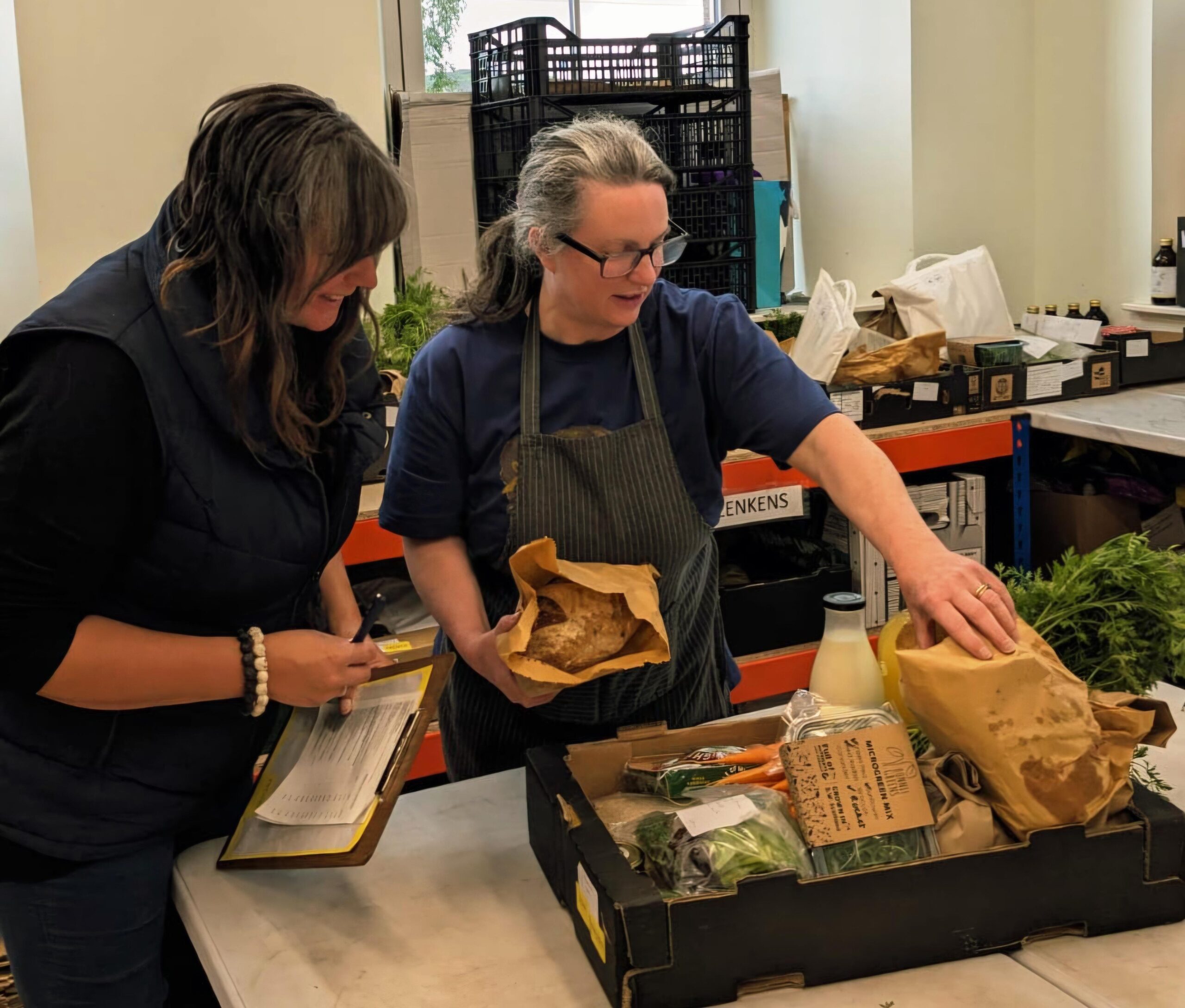
The food hub began in 2021 as a trial with the local farmer’s market during Covid. It began as a small funded pilot for a festive food hub in December, after the local community action plan identified a need for an online food hub. Once funding was secured, two part time members of staff were employed to do roughly 20 hours per week between them, and they were given 8 months to recruit producers, customers and create a regular food hub. It started quite small but got to about 11 producers pretty quickly. For the first order cycles there were bakery products, cheese and a lot of meat available. It had about 20-25 customers every order cycle when it first opened and the order cycles were sporadic rather than regular. The team found it tricky to get going, partly because they were getting used to it, and because they were juggling when they had availability to make it work and enough people. They had a volunteer to start with and some of the producers would help with the packing.
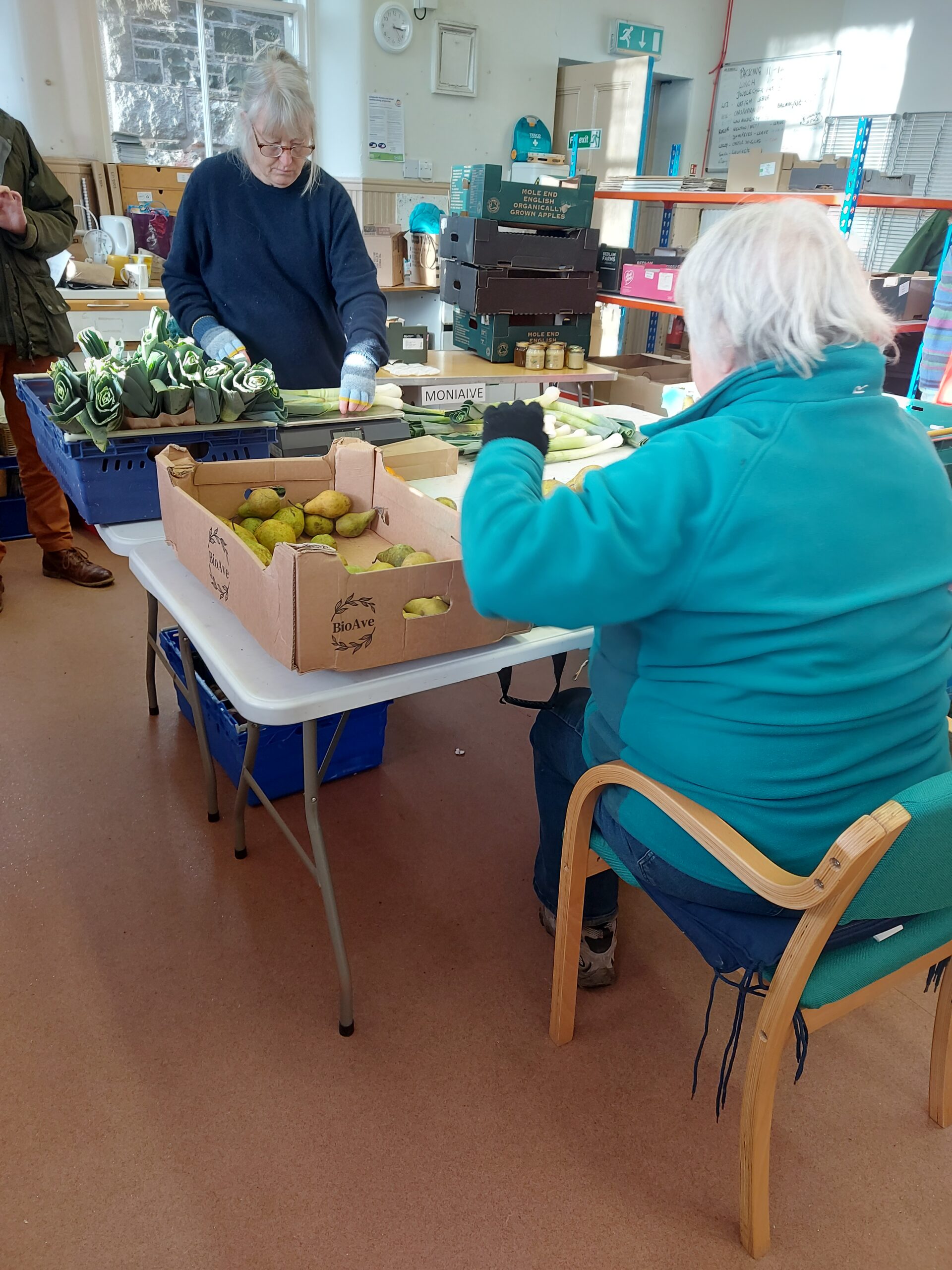
The team started in a temporary space in an old garden centre, which meant that everything needed to be packed down after they’d finished on a Friday. They soon realised that the space wasn’t suitable but luckily the local community centre, which had recently been taken over by a new group, had a room available they could rent. The new location allowed for more space for packing and storing produce and meant the hub was then able to run regular fortnightly order cycles.
What are your key success factors?
There was a very limited offering of locally produced, organic food in the area. Riverford and Abel & Cole don’t do deliveries. There is a very small whole food shop near Castle Douglas, but for people that live a long way from these places it’s not viable to get a regular shop from them. The hub therefore fills that gap for customers.
The hub has also grown their variety of delivery locations organically. At first the hub offered collection and delivery, with the delivery addresses being roughly on the team’s driving routes home. At one point one of the producers offered to take orders to people near her house who wanted to be customers of the food hub. And then a customer turned up who’d ordered a few times and offered to take orders back for some friends.
The two extra collection points were added as their own shipping methods and as these delivery routes have grown the hub now has about 14 different collection and delivery options.
What challenges have you encountered?
The area is so sparsely populated it’s difficult to make it work financially. The hub have tried to counter this by offering a wider variety of produce, so that customers are able to do more of their weekly shop at the hub than just vegetables.
What’s your food system vision?
The food hub became a CIC (Community Interest Company) in August 2024 and that triggered the team to solidify their purpose, mission and vision, which you can read on their website here.
Hub Operations
Governance
The hub makes decisions as a group. Before they became a CIC they had a steering group made up of local producers and volunteers and customers who have become the CIC Board. Questions get taken to them and they will decide and vote using a consent based decision making process (a sociocracy – just like the Open Food Network UK team).
Operations
The food hub has a how-to guide and a producer-hub agreement that they ask everyone to subscribe to, which explains their vision and way of working. The team meets after each order cycle to chat about what needs doing, what went well, and what they need to do differently for next time.
How does produce arrive at the hub?
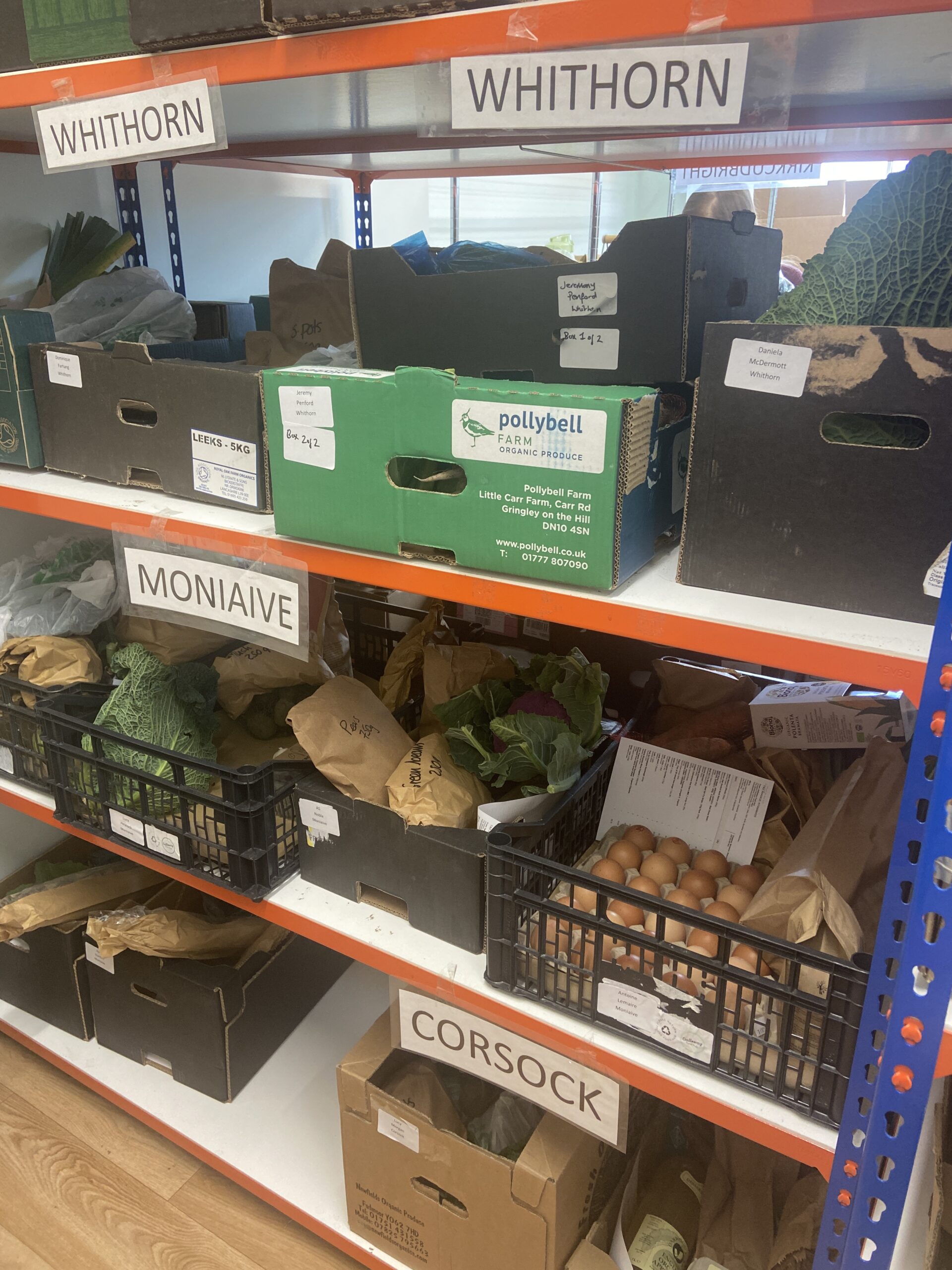
Three quarters of what the hub sells is on pre-order from local producers. They also buy in produce from wholesalers Organic North and Green City which is stored at the community centre ready for packing on Fridays.
The team does all the admin on a Tuesday afternoon so everybody knows what they need to prepare, and it also gives the bakers time to sort out ingredients.
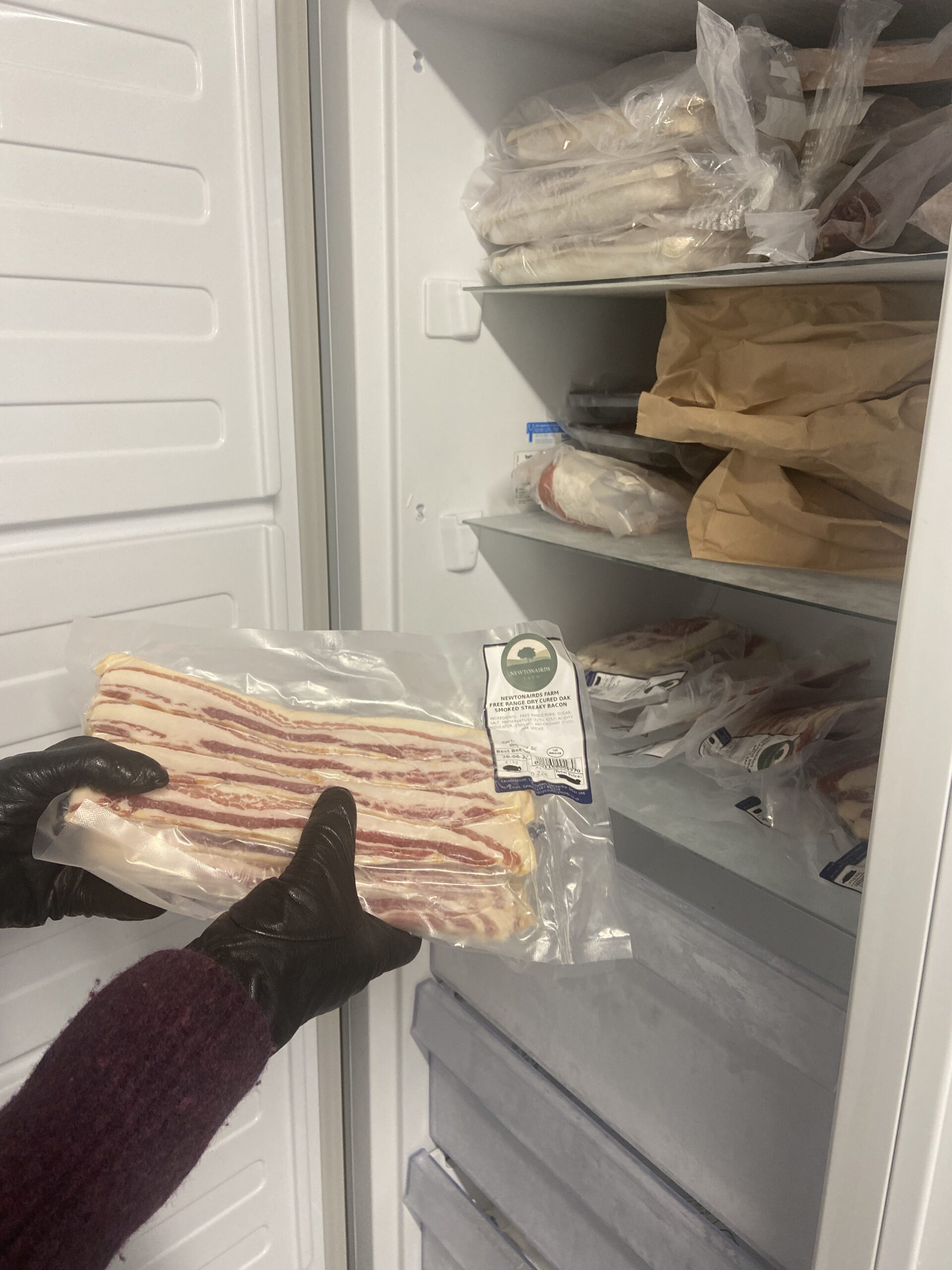
Producers can drop off ambient produce or put chilled produce in the fridge or freezer from Wednesday with all produce delivered by Friday morning.
The food hub has a wide geographic area of 35 miles for producers but over time a co-operative system has developed to gather everything ready for packing and distribution. There are four producers in the East who collate their products together and one of them brings it over and helps pack. Over in the West lots of producers drop items at a gym and then one of our volunteers picks it up and brings it over to Dalry. And then quite a few producers who come from the South drop their produce at the bakery, because the bread is the last thing that gets collected at 10:30am, so all the produce can then be delivered to the hub together.
How do the order cycles run?
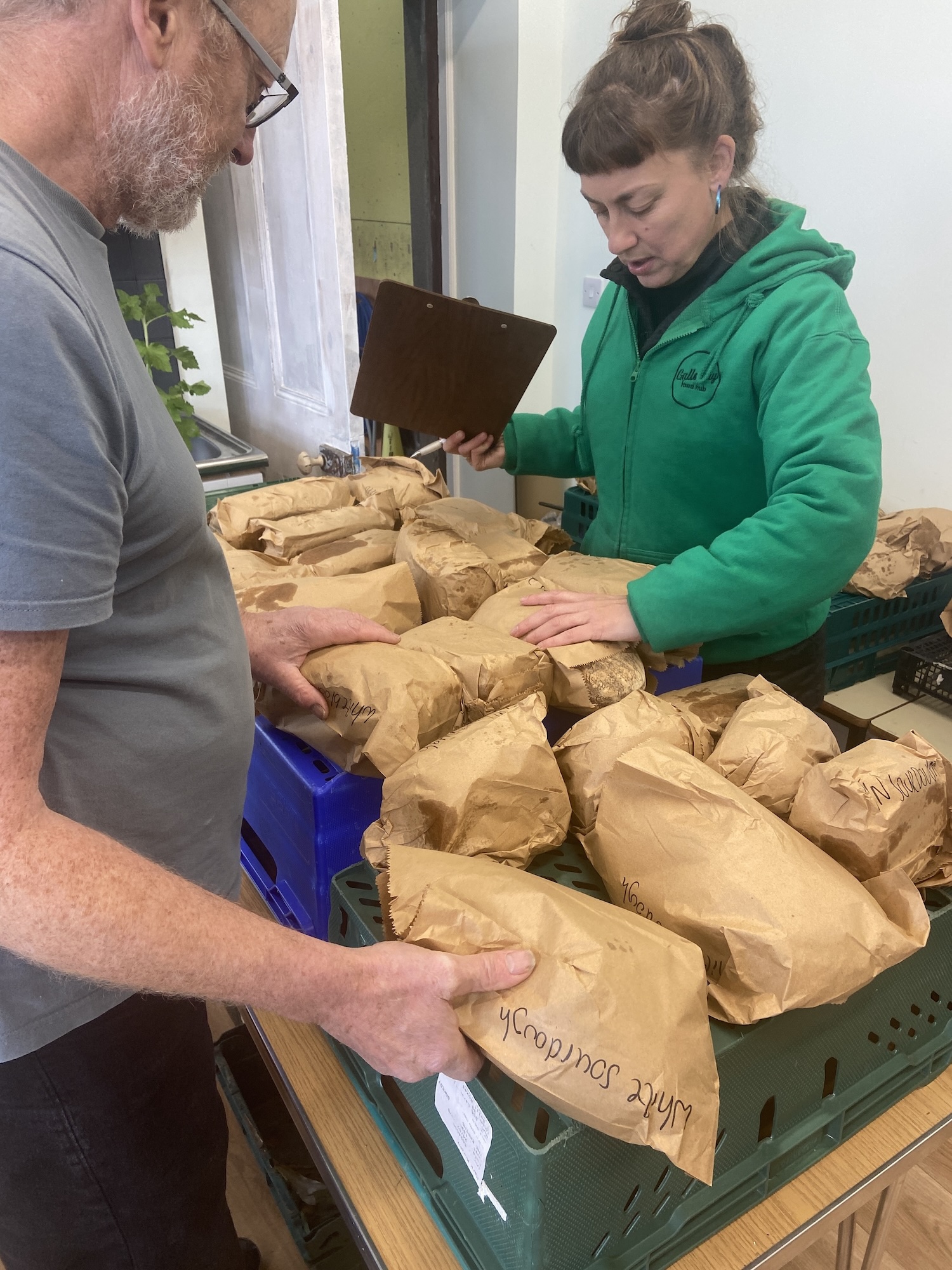
Order cycles open at Friday lunchtime and close at Tuesday lunchtime. All produce arrives at the hub by Friday morning and is ready for delivery or collection by customers later that day. Deliveries go out between 3 and 4 o’clock and customers are given a slot between 3 and 5pm to collect. As the hub is located in a community centre, they are also able to offer collections outside of this time slot by providing customers with a key code to collect after hours, which is hugely helpful for busy customers who struggle to make the 3-5pm slot.
In all the different collection points customers are usually given a 15-20 minute slot to come and pick up their orders. Chilled and frozen produce is kept in fridges and freezers and a note is left on the box of ambient produce to say “milk is in the fridge / freezer” for example.
For people collecting from remote collection points the hub charges a collection fee of £3 which covers the transport and the fuel for the volunteers, and for a delivery they charge £3.50.
Currently all the deliveries are done in volunteers’ own vehicles, so they don’t have a paid delivery driver. The volunteer drivers receive a 5% discount on boxes and are paid £0.30 per mile.
Logistics
How is recycling handled?
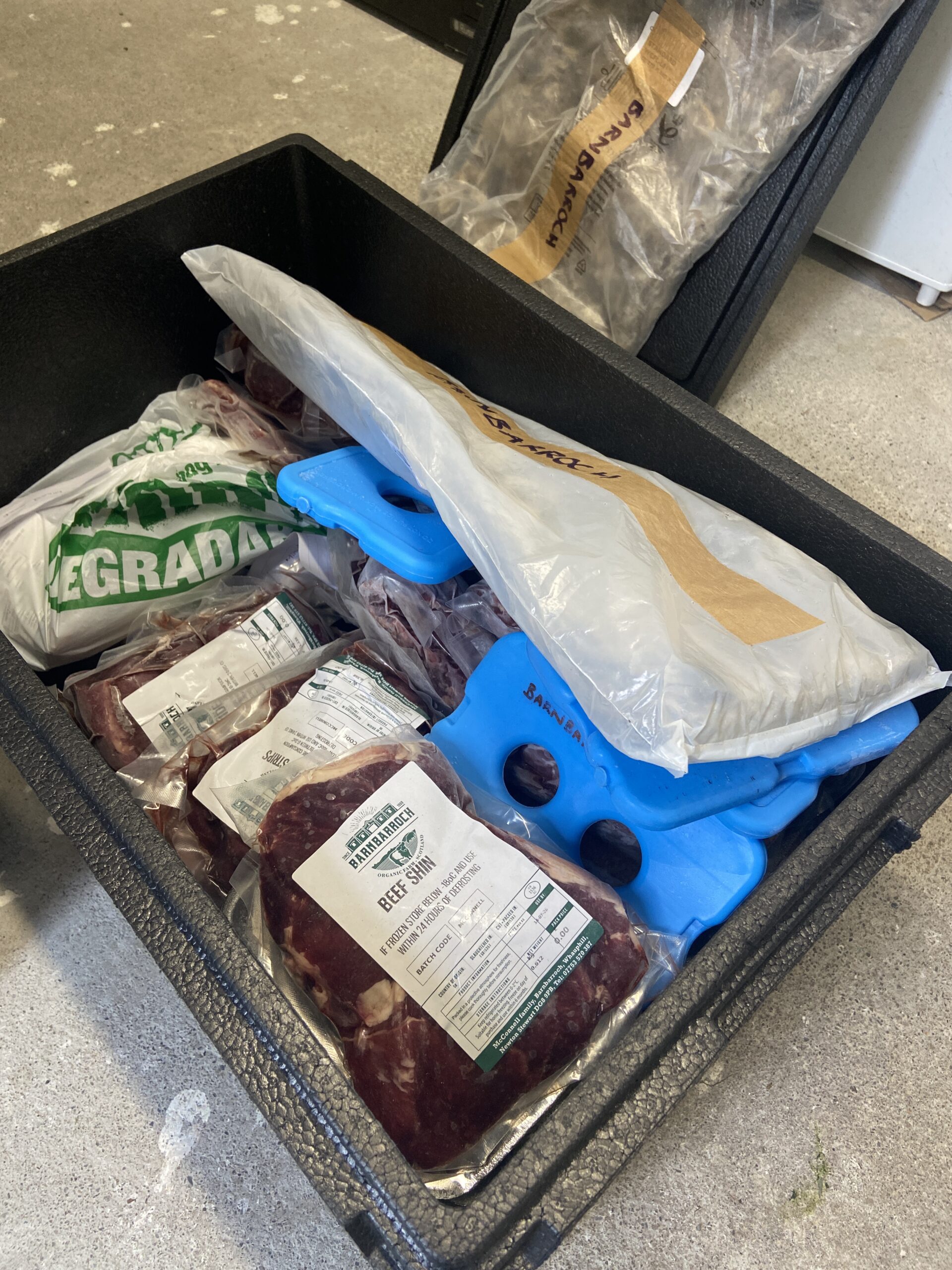
The food hub reuses where they can and there is very little waste. Milk bottles are returned and get washed and re-used. The micro-greens come in a plastic pot which can be brought back and re-used, as can cardboard boxes.
The hub would like to solve the issue of compostable bags from the veg suppliers. It says it’s 100% compostable but it still takes 2-3 years to break down.
Cardboard gets put into the wendy house in the Community Centre gardens and gardeners come and take it and use it. And gardeners love the mushroom boxes. People come and get the pallets and re-purpose them for different things.
How is food waste handled?
The hub is proud to not have any food go to waste. Because so much is pre-ordered, what is ordered in advance and left over is either inedible, so it goes into compost, or it gets given to volunteers as a thank you. Certain things will be stored to be sold in the next order cycle, like squash or potatoes, and surplus produce is also donated to the local food bank and community larder.
What equipment do you use?
- Two fridges, two freezers. The first fridge and freezer was bought using wind farm community funding. The second fridge was given for free. The other freezer was bought using community led funding with the local development fund.
- Lots of shelving which is really useful
- Sack cart and trolley
- Weighing scales – proper weighing scales that have been calibrated properly are quite expensive, so these were bought with funding.
- Cardboard boxes and bags which the hub buys regularly
What’s the infrastructure like for your food hub?
The Community Centre has some shelving and storage in the room and it has a kitchen and table so the team can have lunch there. The outdoor space is useful for plants and packaging. However it does have some negatives, for example getting heavy and bulky items down the path and not being able to park nearby, and it’s quite unsafe for vans that are delivering pallets.
How Galloway Food Hub uses the Open Food Network
The hub offers a discount on purchases to people who volunteer with them. They do this using a discounted payment method with a flat percentage rate deduction, which is combined with tag rules such that only tagged volunteers see it at checkout. This means that regular customers don’t see the discount, and also that regular volunteers don’t have to remember a code to enter each time they checkout!
As well as using tag rules to manage volunteer discounts, the hub also controls which payment methods are visible to which customers, for example only offering Cash/BACs payments to a handful of customers.
The hub also uses voucher codes for more infrequent discounts, which can be activated and deactivated at any time and are inputted at checkout.
Enterprise fees are another feature in use by the hub. These fees, which are applied to an order cycle, are used to contribute to the costs associated with hub administration and transport. The granularity of control available with enterprise fees being applied at the producer level also means that the hub can apply a different fee to different producers if needed.
Do you use any integrations?
The Galloway team utilises two add-on integrations that work alongside the OFN platform. Both of these integrations are designed to save time, minimise admin and provide additional insight to how the hub is running.
The first integration automates what was previously a manual process of creating customised packing lists. Whilst the OFN platform has a number of built-in packing reports that are ready to use straight from the platform, Galloway had some specific requirements they were looking to automate. The first of these was around how they packed their meat orders. As meat products were packed in a separate room at the hub, the team wanted a way of splitting out a separate meat packing list, which they had previously been doing manually. They also wanted the packing lists sorted by product, then supplier, and for the shipping method to be included as a column on the packing lists to make deliveries simpler. The OFN team were able to take these requirements and build an automation that generates the packing lists in the exact format needed when Galloway’s order cycle closes each fortnight – all the Galloway team need to do is navigate to a Google drive folder and click download!
The second integration that the Galloway team uses is an enterprise dashboard. This dashboard collates information about how the hub is running and presents it in a simple visual format via Google Sheets, allowing for quick insights into hub performance. Information around total traded per order cycle, average basket size, number of orders, new customer percentage and many more data points is aggregated into a single easy to use spreadsheet. Graphs indicate performance week-on-week and built in KPIs show whether performance is up or down compared to the previous cycle, as well as the previous year. The dashboard also incorporates some custom elements that Galloway had been tracking, for instance when key traders were unavailable or when the hub had a marketing push, in order to monitor the impact these events may have on trading.
Do you use any other software that integrates with OFN?
The hub is using Xero for their finances. They are also part of the Food Data Collaboration project and have a producer who is on Shopify, so are piloting syncing stock between OFN and the producer’s Shopify store.
How Galloway Food Hub works with producers
What sort of producers do you work with?
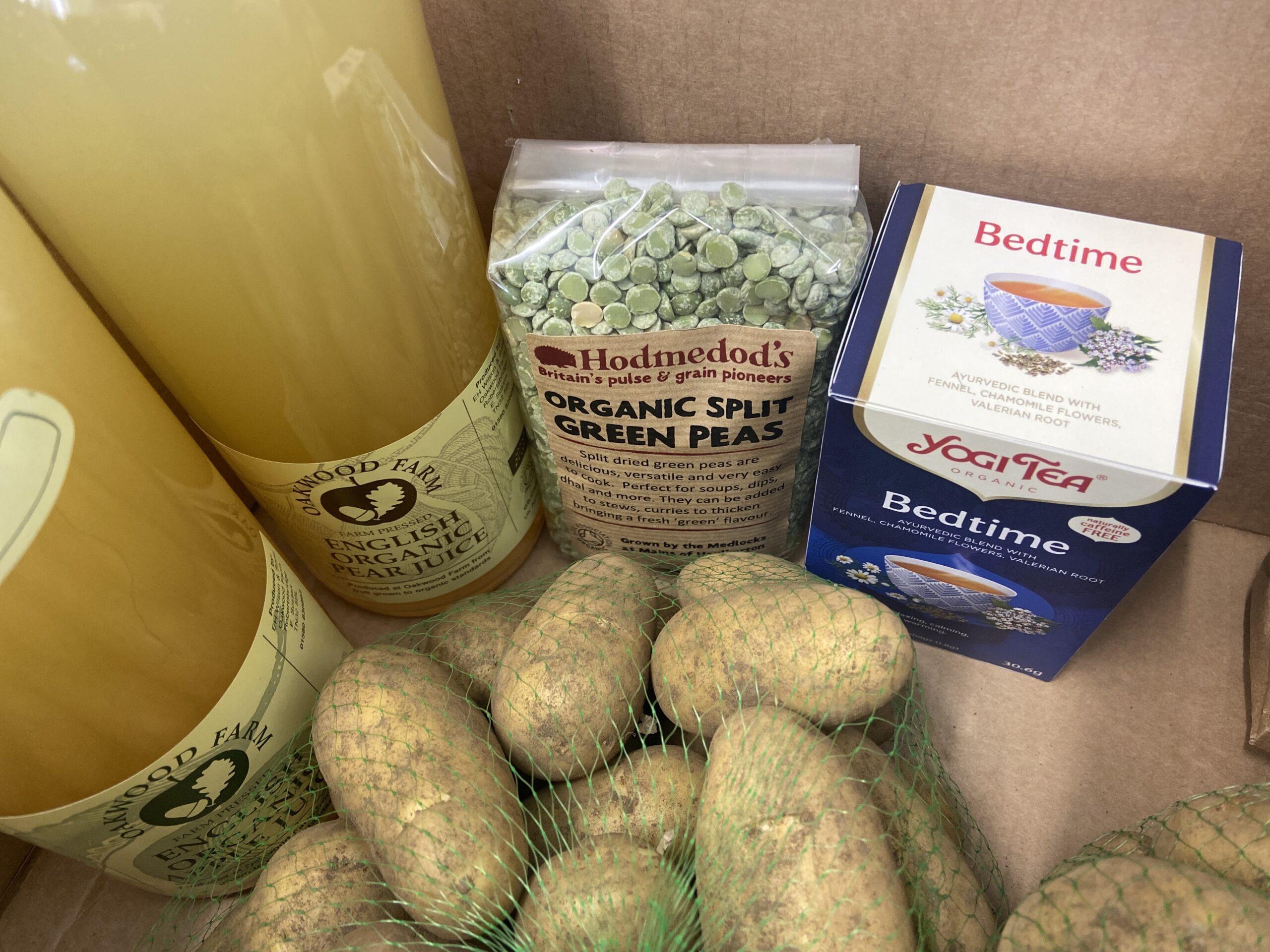
Originally the hub had a lot of meat producers but then a vegan baker who was making veggie pies and pasties and fermented products like kombucha and kimchi joined, which gave the hub an extra dimension. The range of products has expanded with the amount of baked goods and other things locally that are non-meat.
Having producers with similar products hasn’t been a problem. There were three cheese producers at one point but they were all slightly different. And three producers who could all offer beef, but because they only have a few animals they often ran out. The hub has found it quite good to have a few producers to fill the gaps when one runs out.
The food hub has a game producer who sells the meat and also processes it and makes pies. They have just one lamb / mutton producer and a couple of pork suppliers, the thing they’re missing at the moment is chicken.
One thing the hub staff have struggled with is that they buy in produce to make the food hub more interesting, because they can’t get enough local vegetables and a regular enough supply. They are always trying to communicate that they offer local first but also buy in organically certified and super ethical produce to supplement it, and if they can’t get something locally then they will buy it in.
Whilst not everything is certified organic, it’s as close as it can be.
How can producers sell through the hub?
To become a Producer for the hub, suppliers have to be registered as a food business (unless they are veg growers). There is a page on the hub’s website that explains to potential producers how to join.
Producers fill in a form that asks about where they source their ingredients or how they manage their animals.
The hub managers try to get the producers to set up their own OFN accounts and then link through to the main hub.
The food hub has created their own how-to guide that links to the OFN how-to guides.
The producers who supply the hub have other routes to market and through these they know other producers, so they have been instrumental in promoting the hub to new suppliers. All producers have to fulfil the hub’s Good Food Criteria. This ensures everything sold through the hub is agroecologically produced with minimal inputs, using ingredients that you would use at home.
How the hub works for customers
What is the profile of your shoppers?
The hub sells mainly direct to customers. A feasibility study was done that showed that the income bracket for hub customers was very wide; it didn’t really matter about what they were earning, if people wanted to buy from the food hub they would find a way.
The main reason someone buys from the hub is because they care about the environment and what they’re eating and want something natural with sustainable provenance. For some people it’s the organics and the ethics and for other people it’s the locality and where it’s come from.
They have got a really wide range of customers but the demographics are really skewed to the over 60’s in the county.
Business Overview
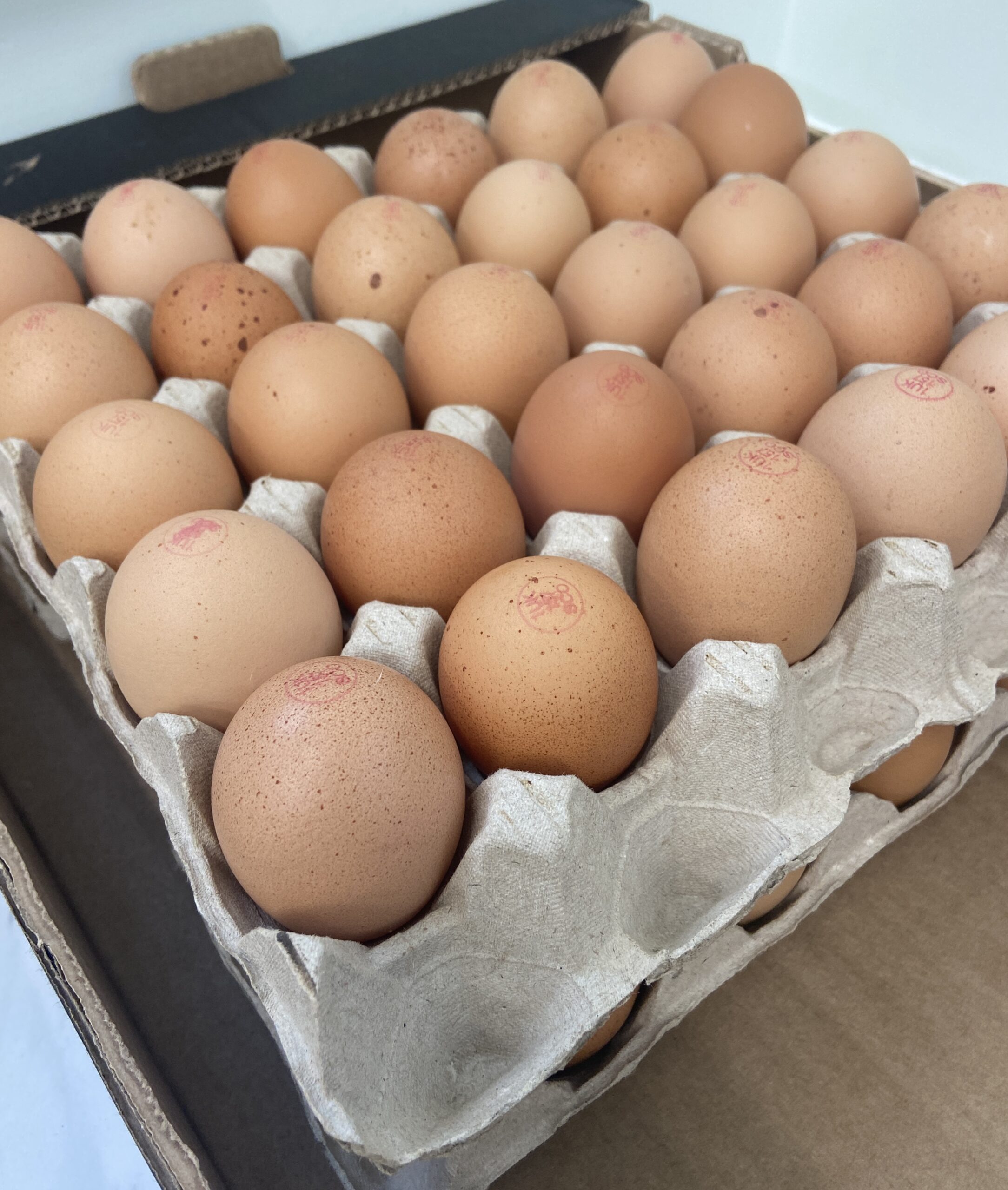
The food hub is making about £100K per year. It only adds a 20% admin fee on local produce, and 30% on bought in produce.
About 70-75% of the food hub’s running costs are covered through external funding.
Marketing
The food hub has a part time marketing officer. They are mostly using social media. They try to post or re-share every day on Facebook.
They use Mailchimp for email marketing and have over 800 people on their database.
All their subscribers get an email on the Friday the hub opens, and another on the Monday before it closes. If there’s anything else to shout about, the team will send another email.
The food hub sometimes advertises in the local Glenkens gazette, which has quite a small readership but lots of people do read it and the hub usually has a lot of editorial in there. The Gazette always publishes a recipe of the month from the hub.
There are sometimes ad-hoc bonuses. The hub was featured in Dumfries & Galloway Life and it was on Landward which is a BBC Scotland radio programme.
Involvement in the Wider Sector
The food hub attends Sustainable Food Partnership meetings for Dumfries & Galloway and they are involved in Better Food Trader’s Regional Food Hubs programme. They often send questions to Nourish Scotland, another group that works on food justice in Scotland. And they keep up to speed on whatever Sustain and Soil Association are doing.
They support the local Galloway & Southern Ayrshire Biosphere, a group that promotes sustainable businesses.
In January to March 2025 the South of Scotland Enterprise funded a wide-ranging assessment of the region’s food and drink industry to help small producers and strengthen local supply chains.
Pieces of work were produced by Propagate, Abundant Borders and JR Consulting.
Impact
When asked what they think has been the change that’s occurred in the local area thanks to their initiative, they told us the food hub has been able to influence local farmers to move to more regenerative practices because of the criteria they have set out for supplying to the hub. They also offer a regular place to sell their produce locally.
“For those that do well and sell quite a lot, this has been invaluable because either they don’t have time to sell directly to customers or going to producer markets doesn’t work for them.”
What are the food hub’s strengths?
“It’s the people; it’s the producers and the volunteers and the staff. It’s having a great group of people who enjoy working together. When we meet other people and we talk about what we do, the enthusiasm and the value in what we do really comes across. For those who don’t confuse us with being a food bank, people see us as this kind of great local food business and we look quite slick and big but we’re just this tiny little thing operating out of the back of a community centre. The loyalty of our producers has been great, we’ve not had many people leave us and if they have it’s just been because they’re not the right fit anyway.”
What are the biggest struggles?
The food hub struggles sometimes to retain customers. They told us they don’t always know why people don’t buy again or don’t buy regularly, and when they do ask the question they rarely get any response. They believe it is down to a mixture of things; for example if people have moved from the area or suddenly they’ve lost their job, or they’ve got ill health so they can’t afford it. They think there are people out there who may have had a bad experience; maybe they didn’t like something that they bought so they’ve not bought again, or there’s something that they’re not telling the hub. So they’re not sure how to retain and get more repetition of customers, and it’s something they really want to work on more.
What would you do differently if starting again?
The original Galloway food hub manager Lesley told us that if she was to go back to the beginning she probably would have tried to visit other food hubs. She said that having more conversations with more similar type food hubs would have been good, and Tamar Valley Food Hub were brilliant and shared lots of useful information with them.
Lesley recommends thinking about how the business is going to run and grow from the start and making sure you’re planning ahead for the admin and paperwork and financial systems.
“At the beginning I just really wanted to make it work and focused on sales and marketing. When we started the project we were planning an 8 month project so didn’t want to spend all our time on finance and admin. I was so busy doing all the practical stuff and I didn’t always think about all the admin. Now we are our own entity and not part of Propagate, we are having to work through our HR and admin processes.”
Lesley also suggested putting your vegetables in rodent-proof bins so you don’t get rats!
“The room we were in [in the Community Centre] managed to get a hole and rats got in which wasn’t fun. So good pest control and checking your walls and things like that is really important.”
What Opportunities Do You See?
There is a demand for what the food hub has created in other areas that they cannot deliver to, so they are potentially going to help set up other food hubs that are further away but that they can link with. This will be similar to the Good Food Loop in South West England.
You can read more about the work of Galloway Food Hub and sign up to their newsletter on their website, and keep up to date with the work of the Procurement for Good project, of which Galloway is one of four hubs working with the Open Food Network to demonstrate sustainable public food procurement, on the Procurement for Good website.
