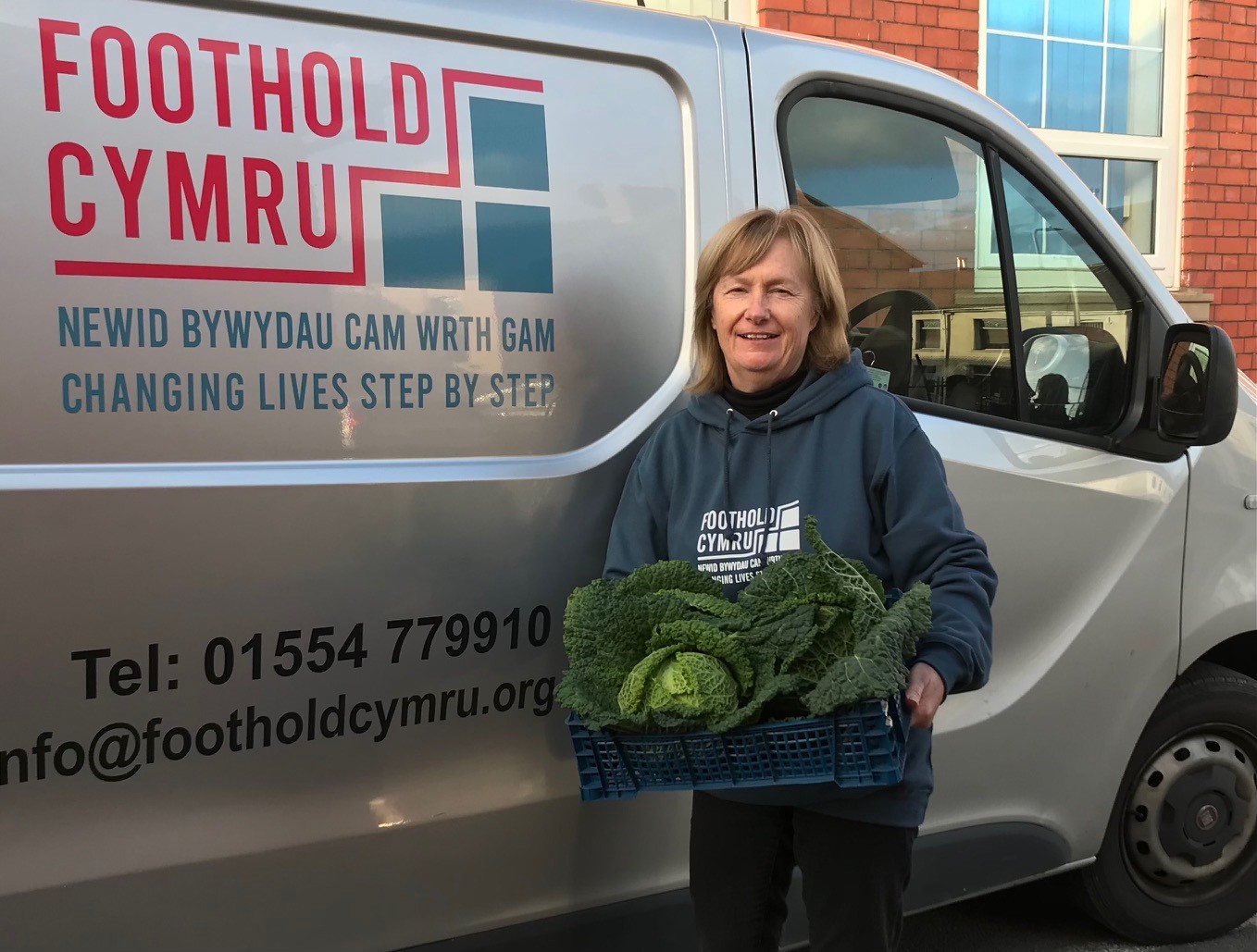
Over the past year, the Open Food Network UK has been working on an innovative pilot scheme to demonstrate the feasibility of supplying local food to the Welsh public plate. Working with partners from Social Farms and Gardens, Cultivate, Development Trust Association Wales and Foothold Cymru, our aim was to show that the public sector CAN procure efficiently from local producers using methods that benefit the natural environment and local prosperity. The project received funding through the Welsh Government’s Rural Communities – Rural Development Program 2014-2020, funded by the European Agricultural Fund for Rural Development and the Welsh Government, to pilot two new food procurement hubs in Carmarthenshire and North Powys. As the project draws to a close, we look back at our key lessons learned from the project.
Background
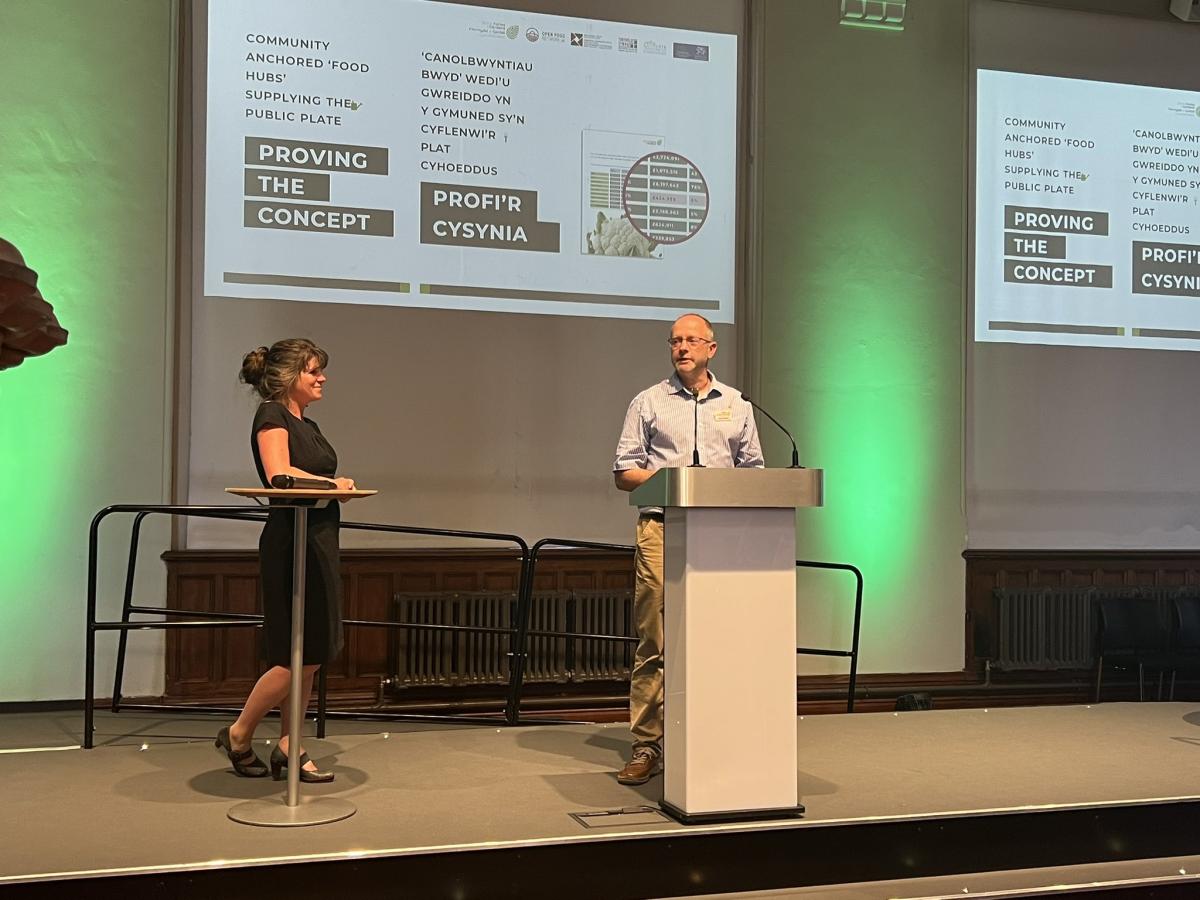
In order to re-imagine our food systems, re-localize the supply chains and increase the quality and nutritional value of food, as well as divert more money to the local economy, the purchasing power of large public bodies represents an impressive opportunity for change. Although dairy and meat products are relatively often sourced from Welsh producers, no other category represents a greater opportunity for improvement than fresh fruit and vegetables. The statistics say it all; only 6% of the fruit and vegetables bought by the Welsh public sector to supply the public plate in 2019/20 were from a Welsh source. That equates to a total spend of around £435k on produce from Wales, compared to £6.8 million on produce grown and bought outside Wales. In comparison, 94% of milk production in 2019/20 came from Welsh sources.

Open Food Network's Role
Although the hubs and other project partners were focused on finding local suppliers and public buyers for the project, the challenge for Open Food Network was how to use the software platform to support suppliers and hubs from a technical point of view. The key requirement from this aspect was to consolidate stock across suppliers in order to supply the larger orders required by the public sector. The need was deceptively simple; combining products from multiple suppliers, aggregated by product type, into a single product listing that public buyers could use to order. In practice, however, this meant firstly defining a pricing model that could be consistently applied across all suppliers to all procurement hubs.
Pricing and Stock Aggregation
Each hub chose to use a different pricing model for their suppliers. One agreed to pay suppliers their individual prices for produce, while the other agreed that all suppliers would be paid the same price for the same produce based on wholesale horticultural price lists published by the UK Government and the Soil Association. The two different pricing strategies therefore required different technical solutions, resulting in two individual integrations (a system for entering and formatting information to ‘talk’ to Open Food Network) being built for each hub.
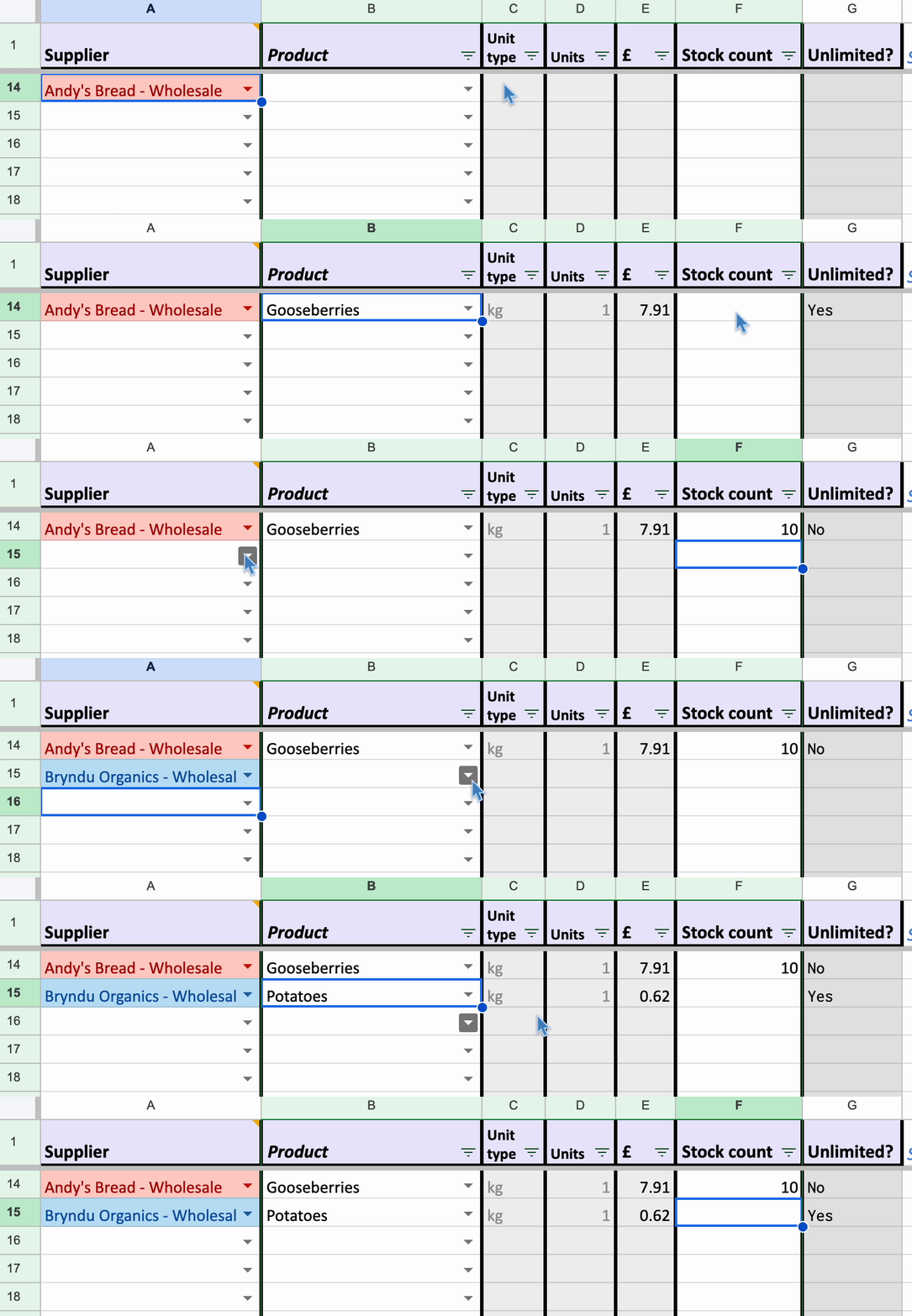
With the project’s short timeline and the need for rapid iteration and development, Open Food Network developed these integrations using script-enabled spreadsheets. The spreadsheets enabled hubs to enter suppliers’ product availability each week, click a button and receive an automatically formatted price list via email ready to upload onto the Open Food Network platform. For the hub that used wholesale price lists, new prices were automatically pulled into the spreadsheet every time they were updated on the government and Soil Association websites, along with the hub defined sales profit margin. This meant that the hub manager could select the products available, and the price would autocomplete to the latest published price.
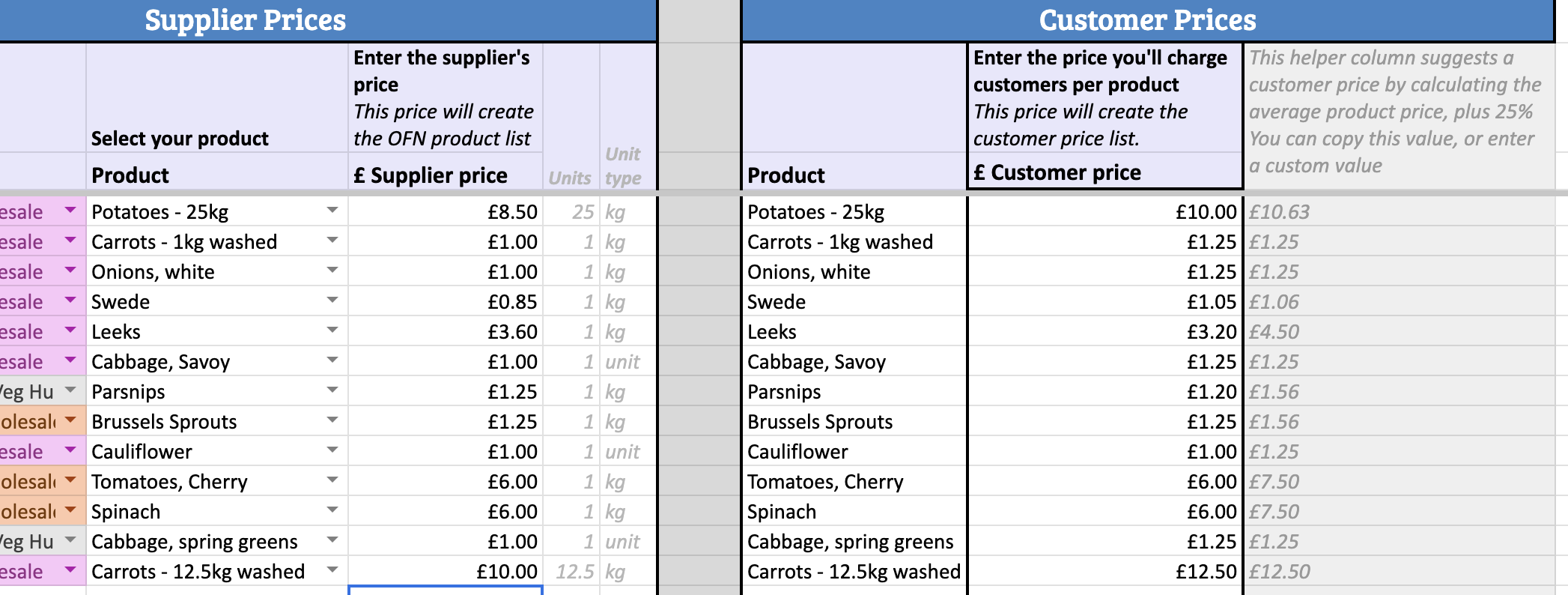
For the hub using supplier pricing, the hub manager calculated the hub’s selling price for the products being consolidated. This resulted in varying profit margins for each supplier’s products that would ‘average’ out with sales across all suppliers. In the integration, a formula was developed to calculate an average price across suppliers together with the hub’s target profit margin to simplify this process.
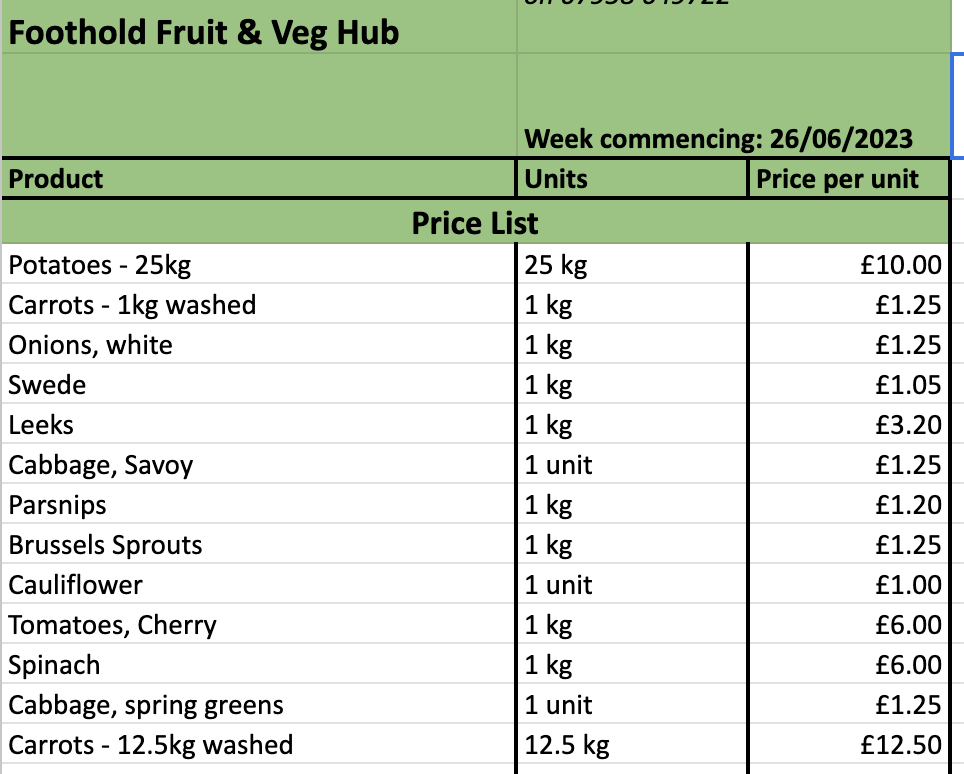
In practice, both hubs found that their buyers were unable to order online, as they were used to making their order over the phone. It was therefore decided to show ‘non-aggregated’ products on the Open Food Network, with aggregated products in a separate price list which was shared with buyers. This meant benefitting from the features that were built into the Open Food Network to easily track orders and deliveries, whilst also working with buyers’ existing procurement processes.
Key Findings
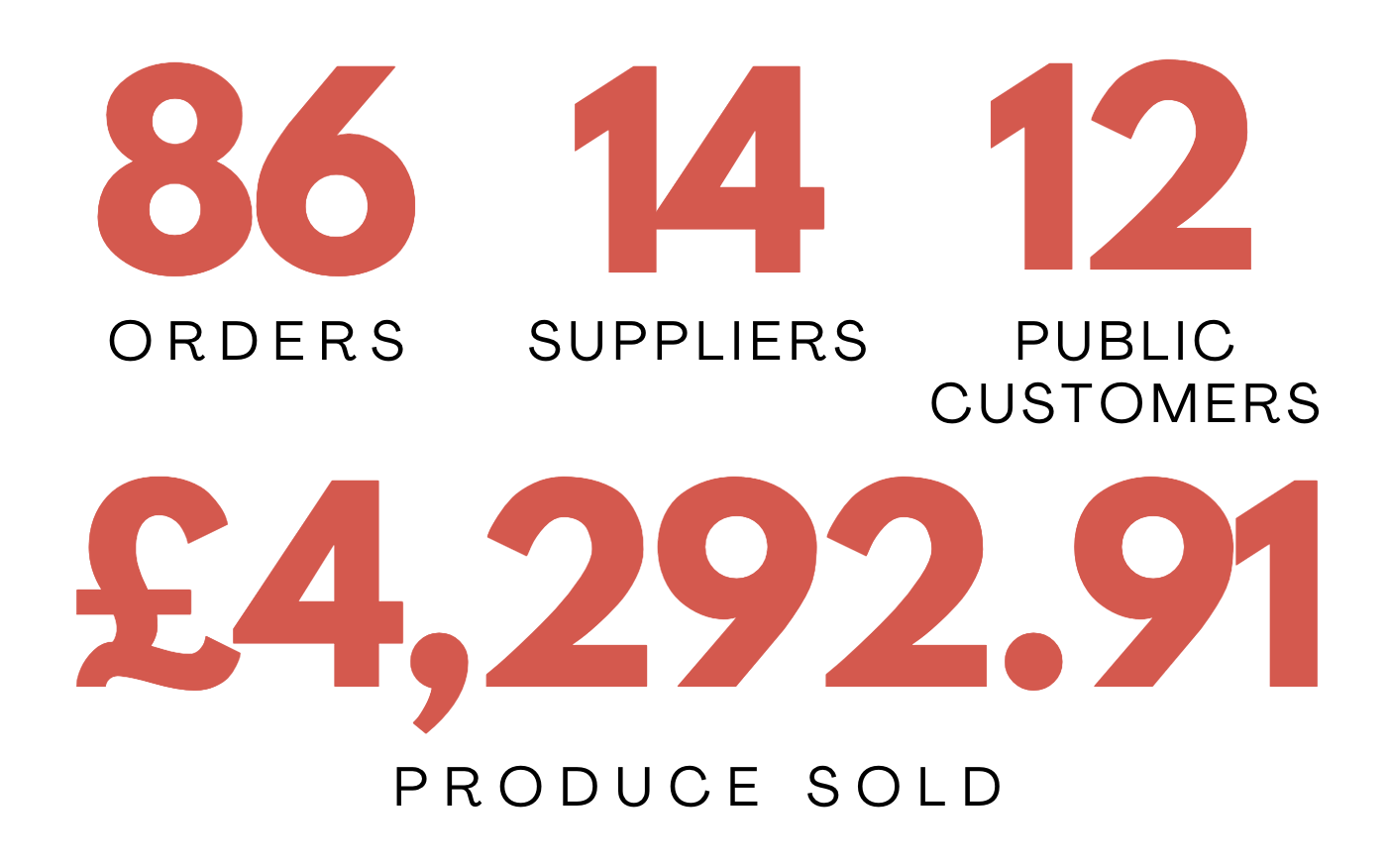
A number of useful lessons were learned during the pilot scheme, which ultimately led to the supply of almost £4,300 worth of nutritious, sustainably produced local food into the public sector, comprising over 80 orders. Here we will briefly discuss the main lessons from a hub management perspective.
-
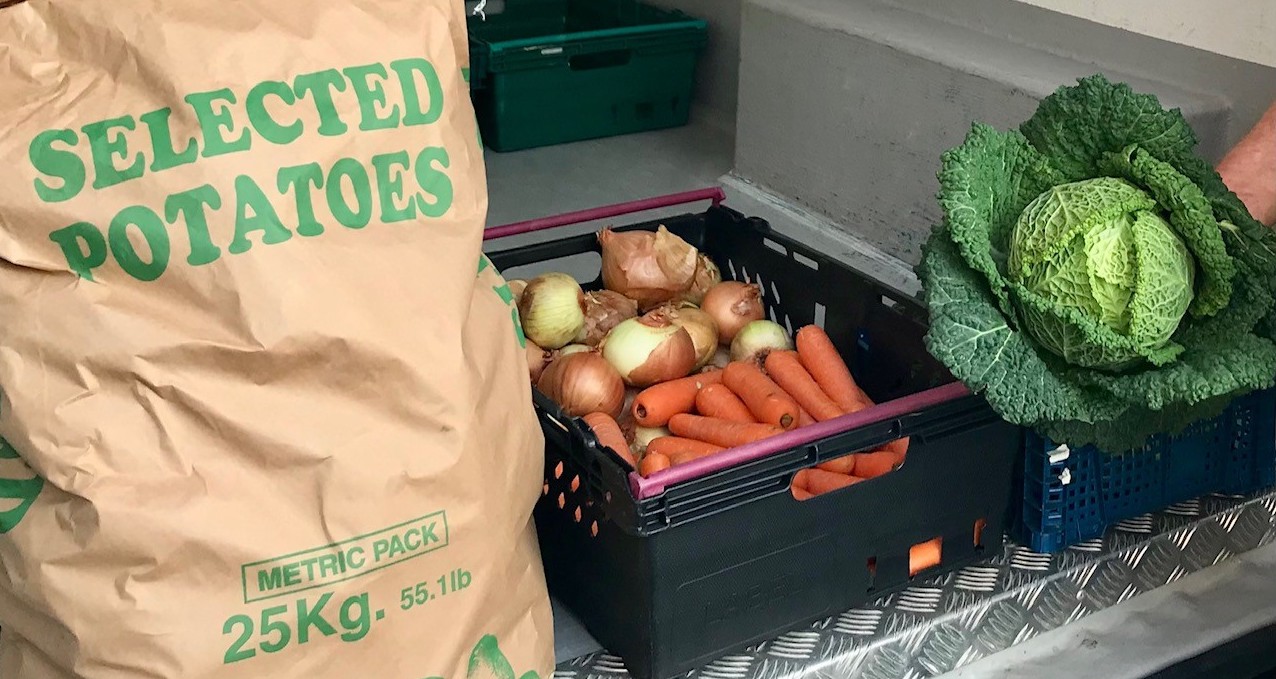
- Buyers were hugely impressed with the quality, freshness and taste of the food.
- Suppliers were also supported to create their own storefront on Open Food Network to sell directly to individual customers through the project, offering additional revenue streams to the local farmers and growers.
- Developing relationships with the buyers was essential, including encouraging flexibility in terms of vegetable varieties (i.e. buyers only wanted to buy one type of cabbage when local suppliers were growing other types).
- To reduce hub admin time when consolidating stock, it was easier for all suppliers to agree on one price per product, e.g. by using the horticultural price lists.
- This also ensured a constant ‘profit margin’ to contribute to the costs of the hub which was not dependent on the supplier used.
- Hubs need to add a margin to supplier prices in order to recoup some of their own running costs.

-
- Encouraging public buyers to use the Open Food Network platform to order was challenging due to them being used to ordering by phone, which they were reluctant to change.
- Hub managers therefore took orders by telephone and put them into the Open Food Network themselves.
-
- Using the Open Food Network system to manage ordering tasks simplified administration tasks for hub managers including the creation of automatic packing lists and invoices, as well as allowing better oversight of hub operations and finances.
- ‘Testing the waters’ with smaller orders establishes relationships and demonstrates the quality of the food, which allows buyers to build trust in local small-scale farmers and growers.
- Building dialogue between suppliers and buyers to establish demand and create an established route to market will encourage small growers to increase outputs and adapt to meet demand.
Next steps
The project has shown huge potential to increase the percentage of fruit and vegetables grown in Wales that reach the public plate. The wider benefits of the project are numerous; boosting the local economy, reducing carbon emissions by shortening food chains, supporting local jobs and improving the health of the planet and people with ecologically produced nutritious agricultural food. The Open Food Network is excited to continue working with the food procurement hubs that have been established and although funding for the project has now ended, the Open Food Network would welcome working with new partners on funding opportunities in this area in the future. You can read the full report, “The Role of Public Procurement in Transforming the Welsh Food System”, on the Social Farms and Gardens website here (available to download in Welsh and English).